

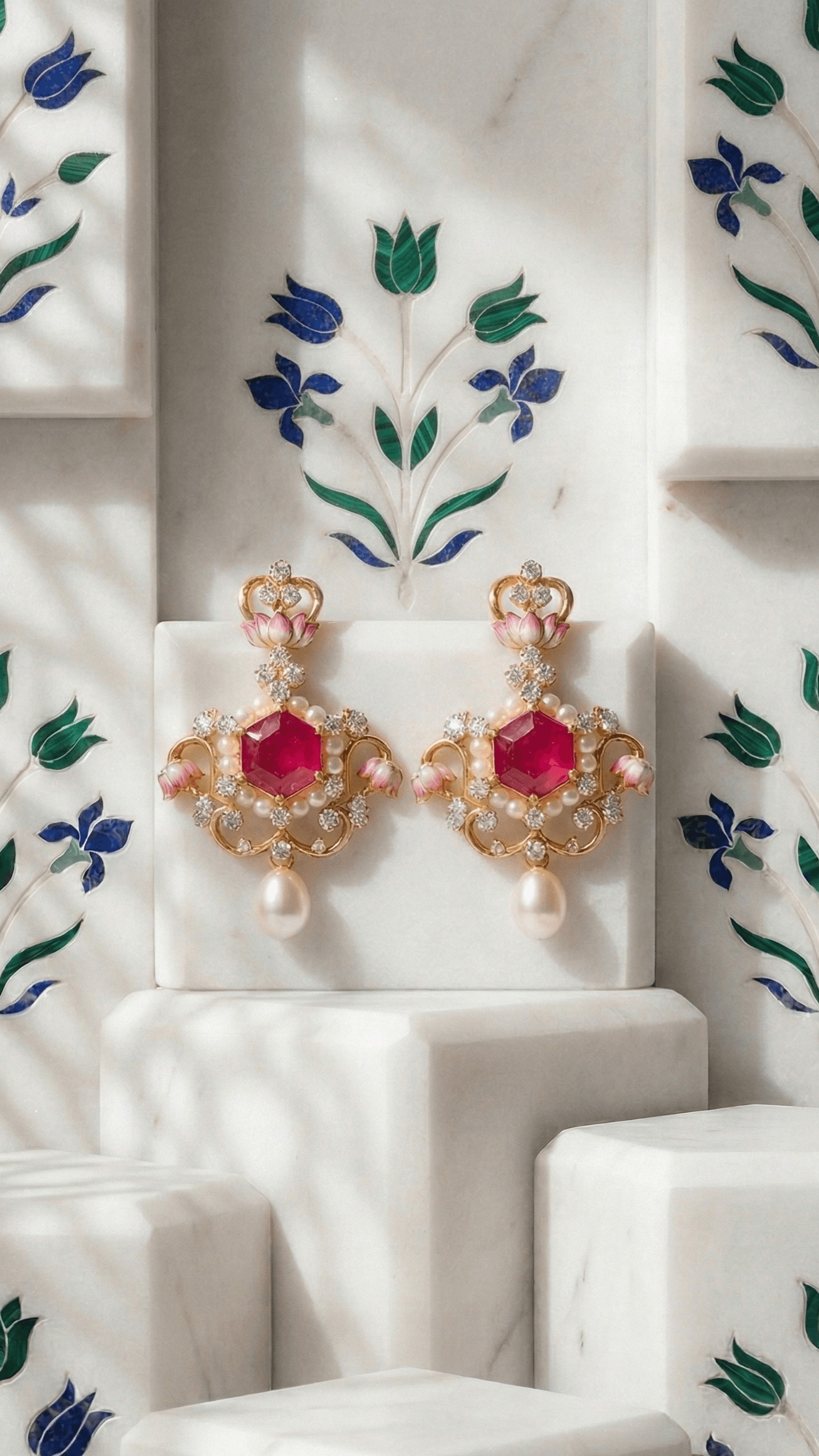
When people admire jewellery, they often focus on gemstones, sparkle, and overall design. However, there is another subtle element that plays a powerful role in how jewellery feels and looks — texture. Texture gives jewellery depth, personality, and visual richness.
When people admire jewellery, they often focus on gemstones, sparkle, and overall design. However, there is another subtle element that plays a powerful role in how jewellery feels and looks — texture. Texture gives jewellery depth, personality, and visual richness.
What Is Texture in Jewellery Design?
Texture refers to the surface quality of a jewellery piece. It describes how a surface appears visually and how it feels when touched. Textures may be smooth, rough, patterned, layered, or sculpted.
In jewellery design, textures can be created through various techniques such as engraving, hammering, carving, or surface finishing. A polished surface reflects light sharply, creating brilliance. A textured surface diffuses light, creating depth and shadow.
Why Texture Is Important
Texture adds character to jewellery. Without texture, many jewellery pieces would appear flat and visually simple. While minimal designs can be elegant, texture allows designers to introduce subtle complexity.
A smooth polished surface may express elegance and refinement, while a rough textured surface may evoke nature, age, or organic beauty. By manipulating textures, designers can create jewellery that captures attention and invites closer observation.
Textures Found in Nature
The world is full of surfaces with unique textures — weathered stone walls, tree bark, woven fabrics, coral reefs, and aged metals. Each texture carries its own character and visual language.
At Sankesh Surana Studio, texture is often explored as an important storytelling element, transforming simple forms into visually compelling jewellery pieces.